Welcome to Silver Innings Blog, Good Day

Powered by IP2Location.com
Showing posts with label caregivers. Show all posts

Saturday, April 29, 2023

Family Support for Older People

 Family systems are the foundation of our society. A family system consists of various individuals who are related by blood, marriage, or adoption. Family systems vary from culture to culture, but their importance remains the same. The role of family in caring for older people has become increasingly important due to demographic changes and the growing aging population. This essay explores the family system and how it can help our older people.

PICTURE: https://sanalake.com/wp-content/uploads/2020/11/Family-Roles-in-Addiction-Treatment-.jpg

The family system refers to the various roles, relationships, and interactions that exist between members of a family. Family systems are important as they provide a sense of belonging, emotional support, and security. They also serve as a source of socialization, education, and values transmission. Family systems can have a significant impact on the physical, mental, and emotional health of their members.

The Importance of Older People 

Older people are an essential part of our society. They have contributed to our communities, economy, and culture throughout their lives. However, as they age, they may experience physical, mental, and emotional challenges. These challenges can lead to social isolation, loneliness, and poor health outcomes. It is, therefore, essential to ensure that older people have access to the care, support, and resources they need to age with dignity and respect.

Family System and Older People

The family system can play a vital role in supporting older people. Family members can provide emotional support, practical assistance, and social interaction that can improve the quality of life for older people. Family systems can also help older people maintain their independence, dignity, and sense of self-worth.

Emotional Support

Emotional support is essential for older people as they age. Family members can provide emotional support by being there to listen, provide encouragement, and offer reassurance. This emotional support can help older people cope with the challenges of aging, such as chronic illness, loss of mobility, and social isolation.

Practical Assistance

Older people may need practical assistance with daily activities such as cooking, cleaning, and shopping. Family members can provide this assistance, which can help older people maintain their independence and quality of life. Practical assistance can also prevent older people from having to move into residential care or assisted living facilities, which can be expensive and may not provide the same level of comfort and support as the family home.

Social Interaction

Social interaction is vital for older people as it can help prevent social isolation and loneliness. Family members can provide social interaction by visiting, taking older people out, and involving them in family activities. Social interaction can improve the mental and emotional health of older people and reduce the risk of depression and anxiety.

Maintaining Independence

Maintaining independence is essential for older people as it can help them maintain their sense of self-worth and dignity. Family members can help older people maintain their independence by providing practical assistance, emotional support, and social interaction. This support can help older people stay in their homes for longer, which can have a significant impact on their quality of life.

Challenges in Family System Support

While the family system can provide significant support for older people, there are also challenges that need to be addressed. These challenges include:

Family Conflicts

Family conflicts can arise due to differences in opinions, expectations, and values. These conflicts can make it difficult to provide effective support for older people, and may even lead to neglect or abuse. It is essential to address family conflicts and find ways to resolve them to ensure that older people receive the support they need.

Caregiver Burnout

Family members who provide care for older people may experience caregiver burnout. This burnout can lead to stress, anxiety, and depression, which can impact the quality of care provided. It is essential to provide support and resources to family caregivers to prevent burnout and ensure that older people receive required care and love. 

Financial Strain

Providing support for older people can be expensive, especially if they have significant health or mobility issues. Family members may need to provide financial assistance, which can strain their own finances. It is essential to plan for the financial costs of supporting older family members to ensure that everyone is prepared for the financial strain.

Distance

Family members may live far away from each other, making it challenging to provide support for older family members. Distance can limit the amount of practical assistance and social interaction that family members can provide. It is essential to find ways to overcome the distance barrier, such as through regular phone or video calls, or by arranging visits when possible.

Limited Resources

Some families may not have the resources to provide adequate support for older family members. This may be due to financial constraints, health issues, or other challenges. It is essential to identify available resources and support services that can help families provide the necessary support for older family members.


Conclusion

In conclusion, family systems can play a vital role in supporting older people. Emotional support, practical assistance, social interaction, and maintaining independence are all crucial elements of the support that family members can provide. However, there are also challenges that need to be addressed, such as family conflicts, caregiver burnout, financial strain, distance, and limited resources. It is essential to find ways to overcome these challenges and provide the necessary support to ensure that older people age with dignity and respect. The family system remains an essential component of our society, and we must continue to value and support it in caring for our aging population.


Sunday, October 16, 2022

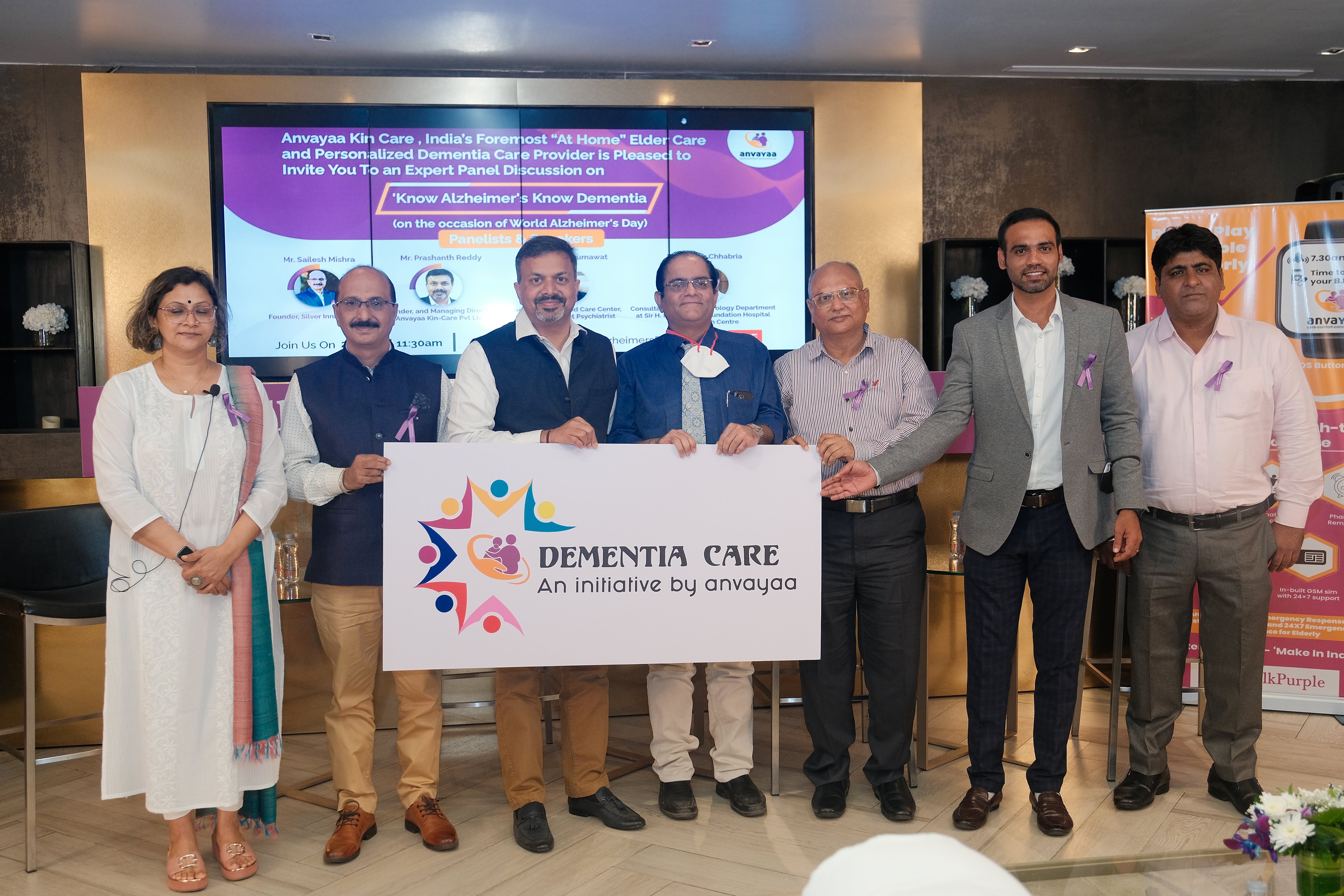
Anvayaa organizes a Fire Side Chat on Dementia Care

 Anvayaa,  India’s first and only IoT and AI tech-based start-up platform providing Companionship and Care to the elders hosted a Fireside chat on World Alzheimer’s Day themed ‘Know Alzheimer’s Know Dementia – Post diagnosis support’.  The panel was attended by Dr. Sanjay R Kumawat, Director, Insight Mind Care Center, Thane, Consultant Psychiatrist, Mr. Sailesh Mishra, Founder, Silver Innings Group, Dr. Manish Chhabria, Consultant Neurology, Sir H.N. Reliance Foundation Hospital & Research Centre, and Mr. Prashanth Reddy, Founder, and Managing Director, Anvayaa Kin-Care Pvt Ltd along with other guests and senior citizens. The chat focused on an insightful discussion on challenges faced by caregivers and family in diagnosis and post-diagnosis care for elders with Dementia and the supportive eco-system required for effective management of such elders.


‘Dementia’ is generally considered a part of aging; however, it does not occur naturally. Alzheimer’s Disease is the most common factor causing Dementia. As per the DementiaInIndia   & #LASI Wave-I report, around 5.3 Million Indians were affected by #Dementia in 2020. This number is likely to go up to a staggering 14 Million by the year 2050. Besides the diagnosis, post-diagnosis care, caregiver burnout, unique treatment plan, and unique challenges in taking care of elders with dementia. A personalized treatment plan enabling regular monitoring and tracking of the elderly is necessary because it manifests differently in different people and across the stages of progression. As the condition of the elderly worsens without adequate care and professional support, the whole family is bound to suffer great stress and pain.

Anvayaa’s one-of-a-kind #DementiaCarePlans are designed to reduce caregiver fatigue and the frustration the family goes through. Anvayaa has repeatedly shown that despite the lack of a cure for dementia, there is still a great deal that is possible to help people with dementia.  In comparison with other conditions faced by seniors, Alzheimer’s disease and dementia have very different symptoms and results. The pathogenesis of dementia is a progressive decline in cognitive function (memory, reasoning, decision-making, judgment, etc.), ultimately affecting bodily function. Dementia affects every aspect of a senior’s life, making specialized and personalized care even more essential. Although every case of dementia is unique, here are some things that may happen to a senior with these conditions’ general loss of memory, language, and decision-making abilities, dementia can cause other symptoms. These include changes in mood, such as increased irritability, depression, and anxiety. This requires compassionate and specialized training of caregivers to deal with the elderly. Early detection and diagnosis of Dementia can greatly help in slowing down the rate of deterioration and immensely helps in providing a much better quality of life for our beloved elders and their families.

According to Mr. Prashanth Reddy, Founder and Managing Director of Anvayaa Kin-Care Pvt Ltd, said, “We are happy to associate with Silver Innings, Dr. Sanjay R Kumawat, Clinical Psychiatrist, and Dr. Manish Chhabria, Consultant Neurology to host this fireside chat to spread awareness about Alzheimer’s disease and dementia on the occasion of World Alzheimer’s Day.  Our aim is to identify the critical challenges faced during post-diagnosis care of people with dementia. We have also developed ‘AI Enabled at Home Anvayaa’s Dementia Care Plan’ for compassionate care through a team of specially trained ‘Care Specialists’ who are guided by a team of qualified clinicians to provide customized support to persons with dementia and help the families to prevent burnout. The enlightening session today, will help Anvayaa further improve the services and help elders live a dignified life.  We firmly believe that although Alzheimer’s cannot be reversed, however with strategic interventions along with the trust and support of the elders and their families we can definitely help to delay the progress. We have already been able to positively improve the quality of life of persons with dementia in the last few months and hope to continuously improve our services and help more elders with dementia.”

Speaking on the occasion Mr. Sailesh Mishra, Founder, Silver Innings Group “It is a pleasure to associate with Anvayaa Kin Care and Dr. Sanjay R Kumawat for this necessary dialogue. As the world is progressing Dementia & Alzheimer’s are turning into a new Pandemics , and if India does not wake up then it will be difficult to handle. These diseases not only affect people with Dementia but also is a social, economic, and psychological burden on millions of families and caregivers.

Adding to this Dr. Sanjay R Kumawat, Director, Consultant Psychiatrist, Insight Mind Care Center said, “It is high time that we sensitize the community about Alzheimer’s disease and Dementia. These conditions are difficult to identify and diagnose. The post-diagnosis care is even more challenging both for the patient and the family. With the present lifestyle, it is time to be prepared for caring and understanding the patient with dementia. We should also make efforts to avoid the disease by adopting a healthy lifestyle. I would like to thank the entire team of Anvayaa to come forward and organize such an enlightening discussion on Dementia Care.”

Anvayaa has extensively grown and presently serves different services such as companionship, caretakers, tech instruction for elders, visiting temples or malls-assisting the elderly with shopping and other errands through our care managers. With technology-driven initiatives, Anvayaa guarantees senior residents with services including crisis care and social commitment. Over the past 6 years, Anvayaa has handled 350+ medical emergencies and provided immediate logistic support to the elderly to get access to healthcare in time as a result of which Anvayaa was able to save 97% of lives.


#Silverinnings #SaileshMishra #SeniorCitizens #Dementia #Dementiacare #Mumbai 


Tuesday, January 25, 2022

Humans of Dementia - Ajay

 Ajay became a part of A1Snehanjali in 2013 when he was seeking employment while working as a farmer. Ajay is 25 years old and currently works as a caregiver for people with Alzheimer’s disease. He spends his days taking care of them and tending to the needs of the residents. 

Ajay has been a part of the organisation since the project was initiated in August 2013. After he started working at A1Snehanjali, he learnt about Alzheimer’s and he decided he wanted to help the people who have become the victims of such a “nirdaye” (cruel) disease. “Everyone should live a good life,” he said. “Just because they cannot eat or relieve themselves independently, it does not mean we will take away their right to live a good life.”

As a caregiver, Ajay’s job entails waking up the residents, giving them a bath, giving them their medicines, feeding them their breakfast, taking them for a walk, engaging them in group activities, changing their diapers, preparing their lunch and then taking them for a nap. He manages all their grooming activities like helping them brush their teeth, changing their clothes and trimming their nails.

Ajay shared the story of one of the initial days of his job as a caretaker. At that time, there used to be only one resident in the organisation who had a habit of wandering off. Ajay used to stay by his side all the time and follow him around. Spending all his time talking, playing and taking care of that one resident made him so attached to him that Ajay started considering him as his own family member. When asked about the challenges he faces during this job as a caregiver, Ajay laughed and replied, “It’s their anger and their violent hits.” In situations like these, he waits for a few minutes for them to calm down and then tries again.

Despite this job being physically exhausting and mentally draining, the emotional attachment that each resident has with Ajay makes this job worthwhile for him. He “feels good” even after being tired. There have been numerous days throughout the years where Ajay wants to take a leave. When the residents get to know about this news, they get anxious about how they would be spending their day without Ajay, or who would look after them and listen to them talk. And the day Ajay returns to them, they immediately become happy. Ajay says that all this love and little acts of caring they have for him touches his heart and makes him want to work harder for them.

There is one thing that, he feels, many people do not know about Alzheimer’s and dementia disease― the importance of taking care of people who are diagnosed with the condition. Many people give up on them after the diagnosis because they find looking after them to be very tiresome and taxing. Ajay strongly believes that people should not ignore the needs― physical, mental and emotional― of these people. He also thinks that as a caregiver, it is necessary to know how to handle the resident, how to calm them down and understand them and also efficiently manage their sanitation and grooming.

Whenever someone learns that he is working as a caregiver and taking care of people with Alzheimer’s, they greatly appreciate him. He promises to work for and help these people till the day he can and also hopes others would follow his lead and help these people in all the ways they can.

Ajay strongly believes "Those with dementia are still people and they still have stories and they still have character and they're all individuals and they're all unique. And they just need to be interacted with on a human level." - Carey Mulligan.


By Vansh Tibrewal


Visit Facebook page: https://www.facebook.com/HumansofDementia 

Instagarm Page: https://www.instagram.com/sihumansofdementia/

#Silverinnings #HumansofDementia #dementia #Alzheimer #humanity #HumanityFirst #love #family #Instagram #A1Snehanjali #Relationship #Caregiver #Caregiving #Humans #Humanity #Caregiving #CarePartners #Touch #care #Smile 


Wednesday, December 29, 2021

Humans of Dementia - Jenet

 Jenet is a 37-year-old qualified social worker who has been taking care of Person with Dementia, Alzheimer’s for the past 7 years. In 2012, she was working with children who were diagnosed with HIV/AIDS, but she was simultaneously also looking for a job opportunity. This is when in 2014, her journey as a caregiver with A1Snehanjali, assisted living elder care home, a project of Silver Innings, began.

Humans of Dementia - Jenet

In 2006, Jenet’s grandmother was diagnosed with Alzheimer’s disease. This was the first time she encountered the condition and understood it. The diagnosis was a changing point in her life because she couldn’t fathom the fact that such a disease exists. However, in the process of taking care of her grandmother and looking after her, she learnt how important it is to be there for a person with Alzheimer’s. She recognized how important it is to tend to their needs and to let them know that there is someone to look after them.


As a professional, Jenet’s job begins at 9 in the morning and ends at 6 in the evening, but as a caregiver, she has a 24-hour job. She believes that there are no time boundaries for a job like this because the residents of A1Snehanjai require emotional care, which isn’t something that can be limited within fixed time periods. Her days are spent planning and managing other workers who work at A1Snehanjali and tracking the activities of the residents ― whether they’ve taken their medicines and meals, and if not, why, what’s their mood for the day, how they are engaging in different activities. She also arranges for doctors, physiotherapists, entertainment programmes and creative activities, helps her staff in grooming and feeding the residents, and always motivates and encourages the residents as well as her staff.

Dementia Friend

She started working as ‘Center Manager’ at A1Snehanjali one of its kind Dementia home in India and her passion, dedication and curiosity to learn was not only noticed but also appreciated by Management and she been promoted as ‘Senior Center Manager’.  Her work not only includes managing A1Snehanjali, but also to work and coordinate with local community and make meaningful impact for development of community including Zilla Parishad Primary Schools, Faith base organization, Municipal Corporation and  Environment. Her work and and human management during 2020 and 2021 Covid Pandemic is her biggest achievement and moment of honour for her organization Silver Innings.

Unsung Corona Warrior

She often came across situations where the family of the resident thought that the memory loss was just an act to gain attention and not a real symptom of something as severe as Alzheimer’s. That is why she believes that there should be more awareness as well as acceptance of the disease. People should know what Alzheimer’s is and if they suspect anyone is showing the symptoms, they should take it seriously and consult a neurologist or psychiatrist. There were also times when her own mood (or the staff mood) seemed like a challenge or hindered the caregiving work. In situations like these, Jenet conducts creative activities like painting and crafting, or different entertainment programmes like movies, listening to songs, dancing and playing games as a means to relieve the stress of her team and also refresh the residents mood.

Multi Role Dementia Warrior

The person suffering from Alzheimer’s are dependent on others; they need love, care, support and attention. Even though there is some stress, the emotional attachment with the residents and their love makes up for all of it. She says that although the residents might not remember her name, they search for her when she is not around, and this, alone, is enough for her to keep working for them.

The day she had taken up this job, her family had been bewildered, “Udhar jaake kya kaam karegi?” (What work will you do there?) However, now, after Jenet has made a lot of people aware about Alzheimer’s and how they need to be taken care of, people are proud of the work she is doing.

Jenet has learn from a wonderful quote from Leo Buscaglia that “Too often we underestimate the power of a touch, a smile, a kind word, a listening ear, an honest compliment, or the smallest act of caring, all of which have the potential to turn a life around.”


-Vansh Tibrewal


Visit Facebook page: https://www.facebook.com/HumansofDementia

 Instagarm Page: https://www.instagram.com/sihumansofdementia/


 #Silverinnings #HumansofDementia #dementia #Alzheimer #humanity #HumanityFirst #love #family #Instagram #A1Snehanjali #Relationship #Caregiver #Caregiving #Humans


Tuesday, October 26, 2021

Humans of Dementia - Jasmina

After Jasmina completed her university education, she became a stay-at-home mother. Spending all her time at home, she felt like she was sitting idle without a purpose, especially since she was qualified to take up more work. She was dissatisfied with her current state and decided that she would venture out to work. This is when she was introduced to A1Snehanjali assisted living elder care home, a project of Silver Innings and the work they do for elders and dementia. And the credit also goes to her husband, who encouraged her to take up some work, then being idle at home. 


Prior to her introduction to A1 Snehanjali, she didn’t know what Alzheimer’s disease was. However, when she visited the centre and spoke to the staff, she learnt more about the disease itself as well as the role of a caregiver in the dementia person lives. As she began coming to the job, she felt a homely feeling, an affection and closeness, which was missing in her life. The person with dementia seemed like her old parents and grandparents, and she found happiness in serving them. The missing piece in her life had been filled by her job.

Jasmina has now completed two years as a Center In charge and caregiver at A1Snehanjali. Serving the person with dementia (called as Residents) over the years, she has come to realise the value of her own parents and elders, and how fragile those relationships are. She has also found her co-staff and management to be helpful and supportive of each other, creating a healthy work environment. This is why she considers the person with dementia (residents) and staff to be her second family. But, it is also due to this attachment that when a any residents passes away, it really affects her a lot. When you serve someone every single day and one day they are no longer there, it creates a void and the absence is felt. While this hurts Jasmine a lot, she knows that this is a part and parcel of her work as a caregiver, and so, she continues to work in order to better the life of the residents.


Jasmina’s family members are very proud of Jasmina and the work she does. Her children and mother-in-law are extremely supportive of her job, and it is due to this that she is able to contribute time at her job and at home. Every morning, Jasmina wakes up, sends her children to school and comes to the centre. At the centre, she spends time with the residents, person with dementia - talking to them, facilitating prayer time, doing meaningful activities with them like singing, playing, drawing and watching TV. While she is at the centre, her mother-in-law looks after the home, which provides Jasmina support as she is freely able to go to work without worrying about the house. When Jasmina returns from work, she spends time with her children and finishes up the housework.

Having worked as a caregiver for last two years, Jasmina only has one thing to say - “Understand the value of your parents and grandparents. Respect them and care for them. Teach your children the same because if you don’t, one day you will be in the place of your parents and you won’t have anyone there for you.”

- By Vansh Tibrewal


Visit Facebook page: https://www.facebook.com/HumansofDementia

Instagarm Page: https://www.instagram.com/sihumansofdementia/


#Silverinnings #HumansofDementia #dementia #Alzheimer #humanity #HumanityFirst #love #family #Instagram #A1Snehanjali #Relationship #Caregiver #Caregiving #Humans  #CarePartners #Touch #care #Smile


Thursday, July 9, 2020

STRUGGLE WITH LOSS OF MEMORY By Shivangi

Imagine not knowing who you are. Not being able to recollect and recognize your own life.
If a person starts to question his own Identity and is unable to answer the basic questions that forms the basis of who he is, not knowing his name, where he comes from and not knowing the people in his family, that in itself it a scary situation.

Courtesy https://blogs.psychcentral.com/

Dementia is a symptom that decreases the cognitive function of the brain and interferes with the daily routine of a person. But again it is a symptom, which might be due to many diseases. The most known disease which leads to dementia is Alzheimer’s disease. It contributes to 60-80% cases of dementia.

In India, forgetfulness is deemed as a part of aging and it is true to some extent. Old age comes with a general decrease in overall heath and not just loss of memory. This becomes a reason for delayed diagnosis of a disease like Alzheimer’s. There is no cure for such a disease so far but early diagnosis can be very helpful in the management of the patient and the family’s outlook towards their situation. Dementia is not just a difficult situation faced by the person suffering from it but it is also very difficult for the family as it is hard to understand how a person who was fine a while ago is now deteriorating like this. No one except the person suffering can understand what it feels like to lose a part of yourself every day and to be unable to explain it.

India is ranked 2nd in terms of people suffering from Alzheimer’s and other forms of dementia; with an estimated figure of 4.1 million. It is expected to double by 2035 according to The Alzheimer’s and Related Disorders Society of India.

Awareness about this issue is important as 6 in 10 people suffering from Dementia wander into the streets alone and cannot find their way back home. Depending upon the age and stage of dementia of the person, it is hard for them to remember even their own name, address or any relevant information that could help them find their way back . In India, only 1/10th of the total missing elderly folks are ever found. Even the ones who are found have a high chance of having sustained major injuries and being in a bad shape due to many factors including their own age.

If I were to have a positive outlook in this situation, then I would refer to the story of a 94 year old woman named Panchubai Tejpal Shingane who was reunited with her family in May, 2020 after 41 years. She was from Amravti district of  Maharashtra and lost her way in 1979. She couldn’t recall anything about herself. With the help of some kind people who took care of her, she was able to survive all these years and finally reunite with her family. The kind of pain and torture it would have caused to the family of Panchubai to have lost her like this is unimaginable.

My grandfather suffered from Alzheimer’s and seeing him deteriorate from a strong man to someone who could not even recognize members of his own family or recollect their names, was painful. He didn’t know who I was and confused me for his daughter. Unfortunately, in September of 2016 he wandered out of the house. Even though we took all kinds of possible precautions and yet something fell short. He went missing for 24 hours and I was not aware of this for more than 12 hours as I was not in town and my parents didn’t want me to be worried as I could do nothing. From the time that I came to know about this, the thought that crossed my mind, haunting me, was that what if I don’t get to see him again and it was heartbreaking. Those 24 hours were equally and more devastating for everyone in the family. He was found in the ER of a hospital. He had sustained major injuries including a broken hip but thankfully we found him. Few months later, he breathed his last in February, 2017. I believe the few months we got to spend with him were a blessing in disguise and I am grateful for that. It pains me to think that for one entire night nobody, in a place as busy as Delhi, noticed him or tried to help him.

I would request everyone to keep an open mind and not ignore someone in need of help. There are so many such cases in the world and we need to pay more attention towards these cases. Be kind.

Even today in India there is no centralized support system for people suffering from dementia. With such an alarming increase in these cases, such a system is highly needed along with the necessity of awareness about this disease and such situations.

As a human being, I feel it is very important to be compassionate towards the weaker sections of the society, especially the elderly in this case.

By Shivangi - Introspection: Looking Within Us

Source: http://shivangisharan.blogspot.com/2020/07/struggle-with-loss-of-memory.html?m=1

Monday, June 11, 2018

Unsung ChangeMakers of Dementia- a short film by Abhilasha Tiwari

डिमेंशिया / अल्ज़ाइमर - दिमाग की बैंड बज गई - क्या आपका कोई प्रियजन डिमेंशिया से ग्रस्त है ? देखिये वीरो की कहनी


Unsung ChangeMakers - a short film by Abhilasha Tiwari: Old age can be tough, dementia & Alzheimer's make it tougher but the toughest is to handle a sufferer of dementia with all the smiles.

All I knew about dementia and Alzheimer's was through movies, shows, articles etc and I thought I knew about it really well. But hey, the real scenario showed a completely different picture.

And what was more surprising was the job of the caregivers who are working with them 24*7. and you will .know in this video about the WHY.

Dedicated to all you unsung changemakers.

By Abhilasha Tiwari

Special Thanks to Staff and Family Members at A1 Snehanjali, SilverInning Foundation, Silver innings, Sailesh Mishra, Jenet Faras, Joana Tai, Rita, Jennifer


Music : https://www.bensound.com


aBHi laSHa
Published on Jun 8, 2018


#Dementia #Alzheimer's #India #Ageing #Caregivers #Aging #Changemakers #UnsungHeroes #StoriesofChange #Silverinnings #A1Snehanjali #Mumbai #Oldage #Dementiahome #AssistedLiving #SeniorLiving #AbhilashaTiwari #DementiaCare #RememberME


Sunday, January 7, 2018

Book Review by Ravi Shet: Remember Me: You, Me and Dementia

Book That Will Find Place in Your Book Shelf

Sailesh Mishra’s Remember Me: You, Me and Dementia is an easy read for any of us. This book is highly recommended to those who are on the dementia journey with their loved one. Dementia awareness is very poor in India and people impacted find it really hard to get information on it. With this book, Sailesh Mishra has made a sincere effort to promote hope and assurance for managing dementia and its consequences.


The book is divided into a number of chapters and can therefore be used successfully as a self-help guide, in which key issues are easily addressed. The chapters have been written by various peoples who are involved in the work related to dementia care and awareness. It intends to boost understanding of dementia and also elaborates the methods to handle symptoms and behaviour issues. It is packed with real time incidents which gives more genuine emotional appeal to the readers. Chapter 24 (Carer – Looking After Yourself) by Lisa Gratrix is really well written piece and will serve as a good guide for caregivers involved in dementia care. Chapter 41 (In Remembrance of My Parents) penned down by Vanita Kumta takes you through the emotional journey of her life’s important part. Photo Story consisting of four pages adds more value to this book.


Kudos to Sailesh Mishra and his efforts to bring out this book, especially in our country where still there is a huge void with respect to the information and awareness on dementia. It is surely bound to inspire others to help and support people with dementia and also spread awareness about it.


Ravi Shet is the Co-founder of www.treatum.com , an online healthcare portal connecting patients with right doctors. His area of interest is writing articles and doing reviews on films and food.

Posted on 7th Jan 2018 


Buy the Book at Amazon : https://www.amazon.in/dp/9385221051

Wednesday, January 13, 2016

Apply for UN INIA SOCIAL GERONTOLOGY Training in Mumbai April 2016

INTERNATIONAL INSTITUTE ON AGEING
UNITED NATIONS-MALTA
AND
INTERNATIONAL LONGEVITY CENTRE-INDIA 
IN COLLABORATION WITH 
TATA INSTITUTE OF SOCIAL SCIENCES
(INTERNATIONAL TRAINING PROGRAMME)
SOCIAL GERONTOLOGY
11TH – 15TH APRIL 2016, MUMBAI, INDIA


BACKGROUND
The dramatic and unprecedented increase in the number of older persons in the World will lead to unique political, economic and social consequences. In developing countries, where by the year 2025 seventy-two per cent of the world’s older persons will live, this demographic development will pose a particular challenge. Although a number of developing countries have initiated various innovative and concrete measures aimed at meeting the needs of older persons, there exists an acute shortage of trained care-givers at all levels in gerontology.
OBJECTIVES
This multi-disciplinary Training Programme in Social Gerontology , designed by an International Expert Group, aims at providing a broad and up-to-date understanding of the complex and far-reaching consequences of mass longevity. Participants are helped to evolve and implement appropriate policies, which will ensure for older persons, a high quality of life in their own society.
AREAS OF CONCENTRATION
The programme consists of lectures and topics dealt with include Population ageing: A global perspective; Key concepts in gerontology; Social aspects of ageing; Economic aspects of ageing; Psychological aspects of ageing; Health aspects of the older persons; The Madrid International Plan of Action on Ageing (I): Older persons and development; The Madrid International Plan of Action on Ageing (II): Health Promotion and wellbeing; Medical Conditions experienced by the Older Persons; Policies on older persons in India; Maintenance & welfare of parents / Senior Citizens Act of India 2007; Feminisation of ageing; Intergenerational solidarity; The Madrid International Plan of Action on Ageing (III): Ensuring enabling and supportive environments; Active-ageing policies for low-income countries; Caregiving of older persons; Communication with older persons; Programmes and schemes for elderly in India; Social Policies and services in the community; Elder Abuse; Quality of life in old age; Dementia & its implications on the individual and the family; Ageing and Disability; Healthy Nutrition in the elderly; Older Persons in the changing role of the family; Socio-economic implications of Population Ageing in India; National Minimum standards for care homes for older persons.
WHO SHOULD ATTEND THIS COURSE
Applications are invited from social workers, academicians, health professionals and others interested in the field of Ageing from SAARC countries.

Following are the pre-requisites for admission to the course:-
1. Adequate knowledge of English Language.
2. Graduates in any field.
3. Experience of/ zeal for working in the field of Ageing/Gerontology       (optional).
4. This course is open for SAARC nationals.

APPLICATION PROCEDURE
Interested persons may apply on-line through ILC-I’s website www.ilcindia.org. Attached with the application form, you also have to upload the following:-
1. A personal letter (giving reasons for attending the course).
2. Passport size photograph (on White Background).
PLEASE NOTE :
♦ Closing date for application is 30th March 2016.
♦ Limited seats available.
♦ Hard Copies of degree certificates (to be submitted on the 10th of        April 2016 at the venue of the training programme.
♦ All Applications received will be scrutinized only after the receipt of    full payment of fees.
♦ ILC-I reserves the right to Accept/Reject any Application.
♦ Fees once paid are non-refundable even if the Applicant fails to            attend the course due to any reason.
♦ In case if any Application is rejected, ILC-I will reimburse the full        amount of the fees paid during the period 1st April ,2016 to 10th          April 2016.
♦ Formal Inauguration of the training programme will be on the             afternoon of Sunday the 10th of April 2016. The details of the same     will be communicated later.
Course Fee:
Indian Participants : Early Bird Registration up to 29th February 2016 : Rs. 12,000/-
After 29th February 2016 : Rs. 15,000/-International Participants : Early Bird Registration up to 29th February 2016 : US$ 270 After 29th February 2016: US$ 300
1. This payment covers the course fee (which includes Tuition Fees     and Training Kit) plus Lunch and Two Teas per day for the period of the Training Program (11th to 15th April, 2016)
2. Accommodation and other arrangements to be made by the participants.

Application Form: http://ilcindia.org/application-form/
Payment Details: http://ilcindia.org/payment-details/

Contact: 
International Longevity Centre-India
CASP Bhavan, Survey No. 132/2, Plot No. 3, Pashan Baner Link Road, Pashan Pune : 411 021.
Telephone No: +91 – 20 – 25862845 / +91 – 20 – 65002595
Email : longevetic@gmail.com Website: www.ilcindia.org

Source: http://ilcindia.org/more-details/ 

Friday, November 6, 2015

7 Signs Your Aging Parents Need Extra Help

While their 84-year-old father recovered at a rehabilitation facility after landing in the hospital with symptoms of a mini-stroke, the Jones (not their real name) siblings took the opportunity to do some cleaning at his house.


Opening the fridge, they were shocked to find layers of mold, hardened food and multiple jars of the same item in varying states of decomposition. They knew solo living had become challenging for their dad, but they didn’t realize the extent of the decline.

“The two biggest reasons for geriatric decline are depression and dementia,” says Amy Fuchs, elder care consultant and licensed clinical social worker in Saddle River, N.J. Depression can set in when older people feel isolated and lonely, and often may be grieving the recent death of a friend.

“Their friends are dying around them, and they’re also fully aware they can’t do what they used to do,” Fuchs says. Early dementia may be subtle and tricky to spot if you don’t live nearby and see your parents regularly. It might look like bouts of confusion, as the Jones siblings thought.

Pay Attention
Often, it takes a medical crisis to spearhead conversations about new needs. But you’ll likely notice signs indicating your parents aren’t as independent as they once were. Elders who want to remain in their home may not admit they need help for fear of being encouraged into an assisted living situation. But letting things go too far can precipitate a crisis situation.

Here are seven common signs to watch for: http://www.nextavenue.org/7-signs-your-aging-parents-need-extra-help/

Saturday, May 16, 2015

WHO AM I - A Poem on Alzheimer's


The twilight hours of cool breeze;
a time for resident-relative to meet;
Seated on Chairs and Wheel-chairs;
they looked unperturbed with the crowd around;

Some could talk, few sobbed …….agitated
but many gave just a vacant look,
If one walked non-stop all around,
others would sit and watch far away…..

The meaningless questions of “how are you”
exchanged with a mute silence or a sob,

What is this disease??????
Why this Suffering ??????

A successful  and eventful career
enough of wealth to enjoy their retired life,
their dreams of being with kith and kin,
in their loving home built with love and care,

All a forgotten past; never to recollect!!!.

Who knew the wheels of  Life
would rotate this way????
the road of destiny
would lead them here….

Can they…….
Enjoy what they own;
remember their mission of life;
share their fears and pain;
express their love to kith and kin?

For ages ….
Sages have dwelled in Silence to realize Atman!!!

This dwelling  has a different search
Neither of Atman nor Paramatman….

A search within…..
WHO AM I??????

-         After a visit to Alzheimer's facility in South India Poem written by Rama Rangaswamy for Silver Innings ' A1 Snehanjali' project.

      Copyright of Silver Innings

Wednesday, July 23, 2014

Is This The Long Goodbye ? BY Lisa Hirsch

My best friend's mother just passed away after suffering from Alzheimer's for the last several years. As she sat by her mom's bed for the last week watching her fade away, I could not stop to wonder what it will be like for my mom when her time arrives. As I received the news uncontrollable tears began to run down my face. I knew a great deal of the sorrow that I was feeling was connected to my own personal grief.


At the Alzheimer support group that I have been attending for almost three years, my leader has been telling me that I was in a grieving process. The first time she said this to me, I responded that I was not, because my mom, was not dying. Now I understand all, too much.

It's funny because just the other day one of mom's nurses reassured me, with delight in her voice, that my mom was doing great. She shared with me how blessed my mom was and that she'll be around for quite a while. After hanging up the phone my emotions, thoughts and feelings ran rampant.

Yes, I understand that I am lucky to still have my mom, yet I also know how much more Alzheimer's can rob from her. Just thinking of how much worse she could become, as this disease progresses, leaves me feeling nauseous and sick to my stomach.

I must confess, that at moments throughout the years, knowing that there is no cure, I have wished that my mom could just close her eyes and go to sleep. I know that if she understood or could see what was happening to her, she would also wish for the same.

Today,I am in mourning for my best friend's mom and maybe also grieving for mine. For now I know that I must express what I am feeling to free myself from these haunting thoughts.

Maybe for my mother and our family this will be a long goodbye. Whatever it is I need to get back into the space of feeling grateful. In less than two weeks I will be going with my son to visit her. As long as I can see her smile and hear her say she loves me, I will push myself to come from a place of being thankful. Yet for now, I can only feel saddened.


My book 'MY MOM MY HERO' is for all the special people in your lives. Over 100 great reviews. Available on Amazon & Kindle worldwide:
http://www.amazon.com/Mom-Hero-Alzheimers-A-daughters-bittersweet/dp/0615773982/ref=sr_1_1?ie=UTF8&qid=1389797650&sr=8-1&keywords=lisa+hirsch


Lisa Hirsch
lisaweekend@yahoo.com
 

Blogsite Disclaimer

The content of this Blog, including text, graphics, images, information are intended for General Informational purposes only. Silver Innings Blog is not responsible for, and expressly disclaims all liability for, damages of any kind arising out of use, reference to, or reliance on any information contained within the site. While the information contained within the site is periodically updated, no guarantee is given that the information provided in this Web site is correct, complete, and up-to-date.The links provided on this Blog do not imply any official endorsement of, or responsibility for, the opinions, data, or products available at these locations. It is also the user’s responsibility to take precautionary steps to ensure that information accessed at or downloaded from this or linked sites is free of viruses, worms, or other potentially destructive software programs.All links from this Blog are provided for information and convenience only. We cannot accept responsibility for sites linked to, or the information found there. A link does not imply an endorsement of a site; likewise, not linking to a particular site does not imply lack of endorsement.We do not accept responsibility for any loss, damage or expense resulting from the use of this information.Opinions expressed by contributors through discussion on the various issues are not necessarily those of Silver Innings Blog.